First-Trip Guide to the Dolomites: Where to Base Yourself for 5 Days
A practical comparison of the five best Dolomites bases for a five-day first trip, judged on access, scenery and how far your day trips can reach.
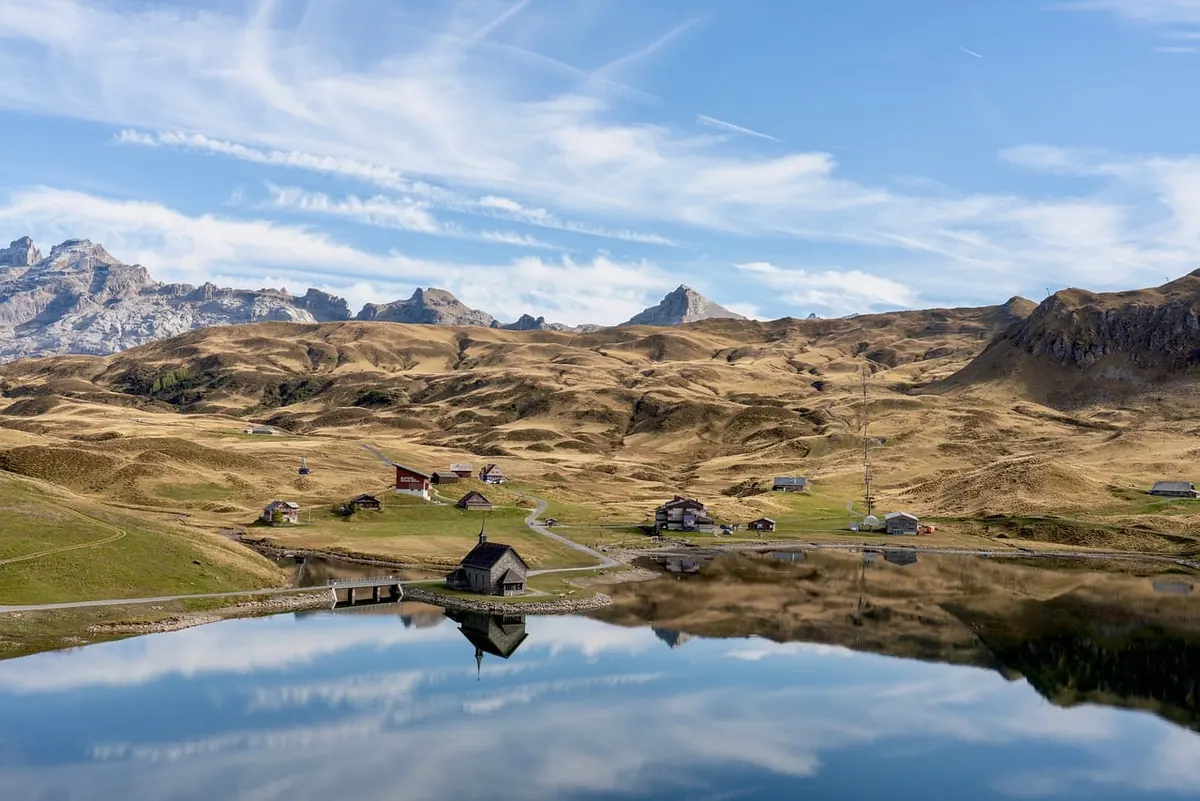
Five days gives you enough time to walk a few good trails, eat lunch above the treeline and still keep an afternoon spare for a lake or a small museum. It is not enough time to tour the whole range, and that is the first thing to accept. The Dolomites are a knot of valleys divided by high passes, and distances on the map lie to you: Ortisei to Cortina looks like a short hop, but the drive over Passo Gardena and Passo Falzarego easily takes two hours.
So pick one base, unpack once, and let the day trips radiate outward. These are the five places that work best for a first visit, compared on what is out the door, how you get there and what you can reach in a day.
Ortisei and Val Gardena: the easy all-rounder
Ortisei sits in the middle of Val Gardena, and its great advantage is that two of the range's signature views start from the edge of town. The Seceda gondola lifts you to the ridge above the village, and the Alpe di Siusi cable car puts you on Europe's largest high alpine meadow without a single step of ascent. Both are genuinely spectacular, and both are busy for exactly that reason.
This is Ladin and German-speaking country, with woodcarving workshops on the main street and a solid choice of hotels, bakeries and restaurants within a ten-minute walk. Access is simple: about forty minutes by bus from Bolzano, which has the nearest train station and a small airport, and cable cars that run from the valley floor mean you can have a serious mountain day without a car.
Two things to know before you book. First, Val Gardena is three villages, not one: Ortisei, Santa Cristina and Selva. Selva sits right beneath Passo Gardena and is better placed for the Sella Ronda circuit; Ortisei is prettier and better for the meadow. Second, July and August fill up early, so reserve accommodation well ahead. This is the base to choose if your group has mixed ambitions and you want the least complicated week.
Corvara and Alta Badia: scenery first
Alta Badia — Corvara, Colfosco, La Villa, San Cassiano — is the base for people who want the mountains to do the talking. You are ringed by passes: Gardena, Campolongo and Pordoi are all within easy reach, which means you can drive a good part of the Sella circuit in a day, stop at a hut for lunch, and be back before the afternoon storms build.
The villages are small and the evenings quiet. Ladin culture is strong here, the food is excellent, and the hiking from Colfosco or San Cassiano starts at a gentle gradient, which suits families and anyone who wants a warm-up day. Road cyclists use this valley as a launching pad for the classic climbs, and you will see why the moment you start up Passo Gardena.
The trade-off is evening life. If you want three restaurants to choose from and a bar scene, you will be driving. If you want a balcony, a view of the Sassongher at sunset and silence by ten, this is the place.
Cortina d'Ampezzo: the classic, with a town attached
Cortina is the biggest town in the Dolomites and the only base that feels like one. There are bookshops, a proper high street, more hotel rooms and a wider spread of restaurants than anywhere else in the range. It hosted the 1956 Winter Olympics and is set to host the 2026 Games, and the infrastructure reflects that history.
The setting is the Ampezzo basin, ringed by Tofana, Cristallo and Faloria, with the Cinque Torri and Passo Falzarego a short drive west and Lago di Misurina to the east. The cable cars up to Faloria and Tofana give you high-altitude walking with very little effort, and the valley floor has easy paths for slow days.
Two caveats. Cortina is the most expensive of these bases, and it has no railway station, so you will arrive by bus or car. It also sits at the eastern edge of the range, which makes Val Gardena and Alta Badia long day trips rather than casual ones. Come here for town comforts and the Ampezzo scenery, not for a central location.
Dobbiaco and San Candido: the quiet east
Val Pusteria has something the other valleys do not: a railway. The line from Fortezza through Brunico to Dobbiaco and San Candido, continuing into Austria, makes this the best base in the Dolomites if you are travelling without a car. Trains connect with buses to the trailheads, and the villages themselves are compact and walkable.
The big draw is access to the icons. Tre Cime di Lavaredo is under an hour away via the toll road to Rifugio Auronzo, and Lago di Braies is a twenty-minute drive. Lago di Dobbiaco, the Fiscalina valley and Prato Piazza offer quieter alternatives when the famous spots are crowded. The architecture and food lean Austrian, the prices are gentler than Cortina, and the whole area feels less polished and more lived-in.
Check the current summer access rules for both Braies and the Tre Cime road before you set out. Private cars are restricted at times in high season, with shuttle buses replacing them, and the rules change from year to year. Go early, whichever way you travel.
Canazei and Val di Fassa: the central hub
Val di Fassa runs beneath the Marmolada, the range's highest peak, and its position makes it the most practical base for covering a lot of ground. Passo Pordoi, Passo Sella and Passo Gardena are all within half an hour, Lago di Carezza is roughly twenty minutes away, and the cable car up to the Marmolada glacier is a straightforward morning out.
The valley is Italian-speaking with Ladin villages mixed in, family-friendly, and generally better value than Cortina or Val Gardena. Canazei itself is lively in summer, with a steady flow of Italian holidaymakers, bike hire shops and plenty of apartments. The downside is traffic on the main valley road and a slightly less dramatic village setting than Ortisei's.
Choose this if you want to tick off the famous passes and lakes without long transfers, or if you are booking late and need more choice of accommodation.
How to choose in five minutes
If you are still undecided, work through these in order and stop at the first line that describes your trip.
- No car: Dobbiaco or San Candido for the railway, or Ortisei if you are arriving via Bolzano and are happy with cable cars and local buses.
- One unforgettable view from the doorstep: Ortisei, for Seceda and the Alpe di Siusi.
- Passes, road cycling and hut lunches: Corvara, or Canazei for the Marmolada and Pordoi.
- Town life, shops and a choice of restaurants at night: Cortina d'Ampezzo.
- Tre Cime and Lago di Braies without long drives: Dobbiaco.
- Tighter budget or a late booking: Val di Fassa, or the Pusteria valley in the east.
Practical notes before you book
Five days is short, so protect the time you have. A few habits make the difference between a smooth trip and a week spent looking for parking.
- Book early for late June through August. The popular valleys sell out months ahead, and the best-value apartments go first.
- Decide about the car first. A car opens up the passes and the quieter trailheads; without one you are relying on buses and trains, which are good but slower. If you drive, confirm your hotel has parking.
- Start before eight. The toll road to Tre Cime, the Braies car park and the Seceda gondola all reward an early arrival with space and softer light.
- Buy lift tickets at the base station or online the night before, and ask about multi-day passes in the valley you are staying in.
- Plan walks for the morning. Summer afternoons often bring thunderstorms; carry a shell jacket even on clear days and turn back if the sky darkens.
- Take the first day gently. Many huts and trailheads sit above 2,000 metres, and a slow start saves you a headache.
- Carry some cash for mountain huts, and check opening dates for high-altitude rifugi, which vary with the snow.
If you are planning anything technical, such as a via ferrata, go with a qualified mountain guide and proper equipment, and arrange travel insurance that covers hiking before you leave. Otherwise, the best preparation is simple: one base, an early alarm and a willingness to change plans when the weather does.
Photo: suju-foto / Pixabay